
"Bones are slaves to soft tissue." John E. Upledger, D.O.
Manipulation
The art of manipulation, or realigning bones, is thousands of years old and has lineages that connect from Asia, India, Europe, and the Americas. It is truly one of the most traditional forms of healthcare used around the world even to this day. Benefits historically include helping a myriad of health conditions that are often associated with musculoskeletal imbalances that can then affect all the other systems of the body, most notably the nervous, endocrine, immune, and circulatory systems. Whether performed by an Osteopath DO, a Physiatrist MD, a Chiropractor DC, a Physical therapist PT, an Acupuncturist LAc, and others in the healthcare community, the ability to manipulate, adjust, or mobilize a bone back into a position of health and balance is the goal of all who use this art. The use of combining manual therapies like osseous manipulations in conjunction with soft tissue techniques like craniosacral therapy work is a very natural and complimentary approach to healthcare.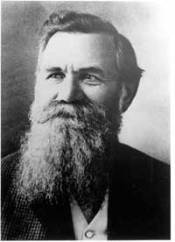 Daniel David Palmer, D.C. (1845-1913) was a friend of Obie Stothers, one of Dr. Still's students. Stothers returned to the school in 1894 with Palmer, a Canadian who practiced magnetic healing in Davenport, Iowa. Palmer came specifically to take treatment from Dr. Still and his students and had many conversations with Dr. Still over the next few weeks. Palmer returned to Iowa and in 1895, started his own practice of manipulative medicine. A friend by the name of Samuel Weed coined the term chiropractic, meaning "done by hand." Palmer realized early on that Still faced a growing conflict in his own school by the staff of M.D.’s, who from the very beginning, wanted to bring an allopathic viewpoint, including drugs into the osteopathy curriculum. In 1897, he accepted his first students at the Palmer School & Infirmary of Chiropractic. Very few American osteopaths today in the 21st century practice in the traditions of Dr. Still. However, Dr. Palmer’s vision of manipulative medicine has actually stayed truer to the fundamentals of Dr. Still’s vision of osteopathy than osteopathy itself.
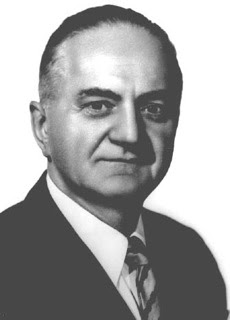 Randolph Stone, D.O, D.C. (1890-1981) developed his unique system of Polarity therapy based on Ayurvedic, yogic, cabalistic, hermetic and alchemic ancient traditions of natural healing. Having degrees in osteopathy, chiropractic, and naturopathic medicine, he had an excellent balance between Western hard sciences and Eastern energetic concepts. He practiced in
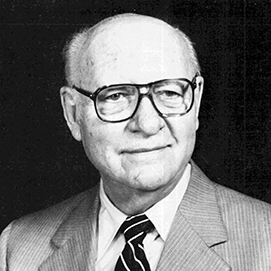 Major B. DeJarnette, D.O., D.C. (1899-1992) must also be mentioned. After an explosion at a factory in Detroit, MI left him severely disabled, DeJarnette decided to try osteopathy as a way to heal himself and eventually graduated from the Dearborn College of Osteopathy in Elgin, IL in 1922. His experience in osteopathic school was mediocre. Still in pain, he met a chiropractor and after 6 months of care, decides to enroll in the Nebraska College of Chiropractic, graduating in 1924. While at osteopathic school, he was introduced to the concepts of cranial osteopathy which have now been the focus of Dr. Sutherland for 23 years. He introduces the cranial osteopathic concepts to chiropractors as sacro-occipital techniques or SOT and places greater emphasis on the pelvis as being the main influence on the nervous system. DeJarnette's osteopathic background, or Sutherland's influence on his later work are rarely discussed even though Sutherland was actually developing his ideas in 1899, the year DeJarnette was born.
Chiropractors have SOT exclusively available to them as an elective in most of their schools where there are also SOT clubs. Many chiropractors take craniosacral therapy classes outside of school and make up a substantial group of therapists who practice this form of therapy throughout the United States and around the world. SOT techniques and CST techniques will appear dramatically different in approach and application to the student of cranial therapy. In CST, no props or tools are utilized, no active muscle testing is applied and no thrust techniques are used during the session. Also, there are preliminary protocols that must be applied before the CST practitioner is able to actually perform techniques on the cranium. Blending with the client, allowing the body to move at its own pace and being patient in waiting for corrections/releases all take time and chiropractors who have high-volume practices will not be able to apply the CST techniques in a manner that befits the patient or the therapy.
Board Certification and Licensure
Dr. Jim Green and his wife moved outside the suburbs of Atlanta to Marietta, GA in 2009 where he attended Life University. He graduated with a Doctorate in Chiropractic (DC) in 2015 and passed the National Boards in 2018 and licensed in 2019. He is board certified chiropractor with speciality certifications in both physiotherapy and acupuncture. To be Board Certified means that a chiropractor has passed all four Board exams of the National Board of Chiropractic Examiners or the NBCE. There are also Boards in both physiotherapy and acupuncture. This means that whether one has done additional trainings in chiropractic school or external to classes, a 100 hour coverage of the material has been presented and tested through the NBCE.One should be very clear that a lot of medical education has redundancy and overlap with all other schools in its basics of medicine. While 100 hours can be an excellent opportunity to start one on the journey of learning about another modality, it can never make up for the intense, long, and specific training that an actual physiotherapist (PT) or acupuncturist (LAc) brings to the treatment room.
Once one has attained Board Certification, then one can apply for State licensure. Many States require extensive criminal history background checks, as well as letters of good standing from any and all States in which you have ever held a professional license and the completion of a law test. All these checks provide for confidence in the education and background of an individual who will be providing services for one's community.
Acorn Seminars policies
We are not an emergency room nor are we a walk-in facility. If you have an emergency, we recommend you call 911 or go to your family physician immediately.
We do not take any diagnostic imaging (X-rays, CT scans, MRI’s, etc.) so anyone who is in need of this service, we recommend you to go to the hospital, your primary care physician (PCP's), or urgent care facilities to have this attended to at once.
Clients will have to make phone bookings to reserve appointments before they are seen and will be assessed case by case whether receiving CST sessions is warranted and will be of benefit to clients.
Payments are by cash or check. When working with insurance companies, the client will pay us directly and a super bill will be rendered so that you can submit that to your provider. We work with no insurance companies directly. All payments are for the CST sessions alone with the manipulations as a complimentary service to our clients.
All manipulations are done by hand on a massage table. There are no tools, props, instruments, special tables, equipment, pre or post machines or technology used in the sessions. The manipulations are part of the CST session and are not used as stand-alone therapy.
All clinical business is done by phone; we use the internet only for advertising and for initial inquiries, whether stateside or internationally. Nothing is done with records or documents electronically, but done the old fashioned way- with paper and pen.